
What launched in 2004?
The campaign case submitted for the 2007 ARF David Ogilvy Awards describes an initial “Tickbox” brand campaign in October/November 2004, followed by a Firming Lotion product phase in January/February 2005. It challenged narrow beauty stereotypes and invited public discussion. Credit belongs to Dove and its collaborating campaign teams; the evidence here does not justify naming one person as sole inventor. Read the campaign case.
The idea at a glance
What did “only 2%” mean?
Dove says its 2004 survey found that only 2% of women would describe themselves as beautiful. That wording matters. It is a self-description finding from brand-commissioned research—not evidence that 98% of all women were objectively unattractive or had a clinical condition. Dove’s account of the survey.
The 2024 report excerpt says the later research included more than 33,000 respondents across 20 markets. It also notes limits to historical comparisons, including Sweden’s absence from earlier research. Do not place percentages from different populations side by side and label the difference a campaign effect. 2024 study notes.
What the business evidence can tell us
The 2007 case submission reports U.S. Dove brand sales increases of 20% in 2005 and 7.3% in 2006, citing Unilever sales. It also reports advertising tracking results. These are campaign-submitter claims covering a wider programme, not an independent randomised estimate of one advertisement’s impact. Business-results section.
The numbers can establish what the organisation reported. They cannot tell a local business what percentage growth to expect from more representative imagery. Product launches, distribution, media exposure and other factors need consideration.
Our interpretation: challenge a convention people recognise
A category often repeats an implicit story about who belongs and what success looks like. Challenging that story can make an audience feel more visible. But representation is not simply a casting checklist; the framing, editing and treatment of participants all shape the message.
For a small business, the question is concrete: do the people in your marketing resemble the customers you actually serve, and are they presented as capable participants rather than props? A useful answer may change interviews, photography, accessibility and the service experience itself.
A positive message still deserves scrutiny
A campaign can challenge narrow beauty standards while keeping appearance central to the conversation. Different viewers can reasonably interpret that tension differently. Do not treat a brand’s intention as proof of a uniformly positive social effect.
In your own campaign, avoid asking participants to disclose insecurities merely to create an emotional story. Obtain clear permission for how material will be used, explain editing choices and avoid turning personal vulnerability into an unqualified sales claim. The experience behind the camera matters as much as the published image.
How to apply it in your business
This is an original Maqtrix workflow to test. It is not a procedure proven by the cited study or a claim about results we have delivered.
1. Audit your category’s default picture
Review your own website and recent category advertising. Note who appears, who speaks, whose needs are assumed and what outcome is celebrated. Keep observations specific; do not claim an entire industry behaves identically based on a few examples.
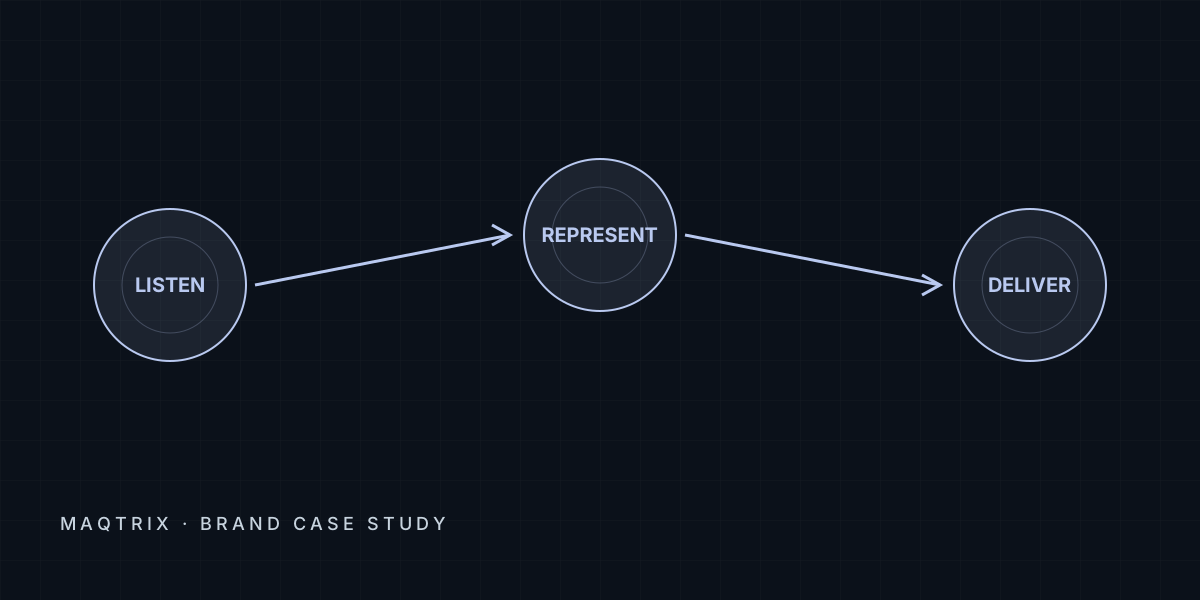
2. Listen before choosing a message
Invite voluntary input from customers about what feels accurate or missing. Ask about the service experience, not only their reaction to images. Do not select only the answers that support a campaign concept already chosen.
3. Choose one belief you can support
A useful position might be that professional event coverage should capture all generations at a family celebration, or that business support should be understandable to first-time founders. Translate the belief into an actual service choice.
4. Plan participation respectfully
Explain the purpose, audience, channels and expected lifespan of the material. Agree on permission, credit and any compensation. Let people ask questions and decline without affecting the ordinary service they receive.
5. Create with the participants in mind
Use accurate captions and avoid edits that contradict the message. Show people doing something meaningful rather than using them as evidence of a virtue. Test whether the intended audience understands the point without a long explanation.
6. Match the landing page to the promise
If the campaign welcomes beginners, the enquiry process should use plain language. If it promises accessibility, examine the actual booking and delivery experience. A warm image cannot compensate for a confusing or exclusionary process.
7. Review response and consequences
Measure understanding, relevance and enquiry quality, and invite criticism. Keep track of participant concerns and resolve them promptly. A campaign should improve how the business relates to people, not just produce a higher reaction count.
A practical service-business example
Hypothetical Maqtrix application: show actual small-business owners explaining the decisions they needed help with, using their own approved words. Include different business stages and levels of marketing experience. Publish only work and outcomes that can be supported.
A useful first story might explain how a founder learned to distinguish website traffic from enquiries. If there is no verified commercial result, the story can still teach that distinction. Do not invent a transformation, client quote or revenue figure to make the campaign feel complete.
What to measure
| Measure | What to record |
|---|---|
| Message understanding | What viewers think the business is promising, in their own words. |
| Audience relevance | Feedback from the customers the service is intended to help. |
| Commercial fit | Qualified enquiries and appropriate purchases, separate from reactions. |
| Participant experience | Consent clarity, concerns, corrections and satisfaction with the portrayal. |
Define the outcome and observation period before launching. Where volume allows, compare randomly assigned, comparable groups and keep other changes limited. With a small customer base, begin with a usability pilot and report the actual counts. A before-and-after change is useful to investigate, but it does not by itself prove causation.
Use the first-party measurement guide to plan the records, and the campaign brief template to document the test.
Common questions
Did Dove invent authentic advertising?
No such claim is made here. This is a documented campaign history, not the origin of all representative advertising.
Can we use the 2% statistic as a current fact?
It should be identified as the reported finding of the 2004 survey, with its wording and source. It is not a current universal statistic.
Does purpose-led creative guarantee growth?
No. The reported business results do not isolate the causal effect of purpose or representation, and they do not predict your results.
Original sources and research notes
Researched October 7, 2026. Historical claims and findings are linked to the sources below. Company accounts are labelled as such. Business workflows, examples and interpretations are Maqtrix’s proposals, not independently established performance outcomes.
- 2007 ARF David Ogilvy Awards: Dove Campaign for Real BeautyPrimary campaign case submission; launch stages and company-supplied U.S. results.
- Dove: Inner CriticBrand’s account of the 2004 survey and the wording of the 2% finding.
- Dove (2024), The Real State of Beauty: Nordic highlights and comparisonsBrand-commissioned report excerpt, with study and historical-comparison notes.
Named brands and researchers are discussed for educational analysis. No affiliation or endorsement is implied.
Continue exploring
Turn the idea into a useful test
Choose one customer decision you want to make clearer. Email us with your business, the current problem and the change you are considering.
Start an email enquiry →